
Plastic cup rim rolling, also called cup curling, is a finishing step that shapes the edge of a thermoformed cup into a rounded rim. In a typical cup finishing line, formed cups are conveyed to a rim rolling machine, then move on to counting, stacking and packaging. The machine setup should be matched to the cup material, dimensions and intended rim shape.
Where does rim rolling fit in cup production?
A thermoforming machine makes the cups. After forming, a conveyor can transfer finished cups to the rim roller. The roller processes the cup edge and discharges the cups for the next station. Counting and stacking then prepare a specified number of cups for packaging. This is an example of a line arrangement; the position and connection of each machine depend on the factory layout.
Typical sequence: thermoforming → cup conveying → rim rolling → counting and stacking → packaging. For a closer look at each handoff, see how a plastic cup finishing line works.
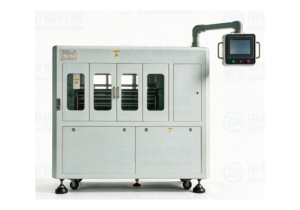
ZNZ-A350 plastic cup rim rolling machine, shown as an example of the rim rolling station.
What happens inside the rim rolling step?
- Feed: Cups arrive at the machine in an orientation and spacing suitable for its infeed.
- Heat and shape: Heated tooling and the rolling mechanism form the cup edge into the specified rim profile. The settings depend on the cup material and dimensions.
- Discharge: The finished cups leave the machine for downstream handling, such as counting and stacking.
Zhongneng’s ZNZ-A350 specification describes continuous cup feeding, rim rolling and discharge, with temperature control as part of the process. The exact tool setup and finished rim should be checked against the customer’s cup sample.
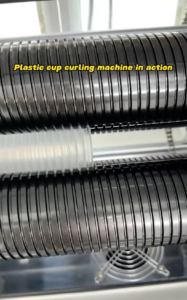
A close view of cup handling in Zhongneng’s finishing equipment.
Why roll the rim after thermoforming?
Rim rolling creates the cup’s intended edge profile after the cup has been formed. For a buyer, the practical question is whether that profile matches the finished cup requirement. A sample check can show how the edge looks and feels and whether it suits any downstream handling or lid fit requirement. A machine name alone cannot establish those results for every cup design.
It is also a separate production station. When planning a line, consider how cups leave the forming machine, how they enter the rim roller and how the rolled cups reach the counter. These transfers matter as much as the rim roller itself.
What information determines the machine configuration?
- Cup material: Identify whether the cup is PP, PET, PLA or PS, and share any material grade information available.
- Cup dimensions: Provide the rim diameter, cup height and a drawing or clear photos of the cup profile.
- Target rim: Show a sample or photo of the edge you want to produce.
- Production target: State the required output and the range of cup formats the line will run.
- Line interface: Share the forming machine’s cup discharge arrangement and the available space for conveying, rolling and downstream stations.
Zhongneng offers rim rolling machines with different die adjustment methods. For example, the ZNS-A100 uses manual die adjustment, while the ZNZ-A350 is an automatic die adjustment model. The right choice depends on the actual cup formats and the way the line will be operated. Browse the equipment range as a starting point, then confirm the current model configuration with the supplier.
Is “cup curling” the same as “rim rolling”?
In plastic cup equipment discussions, the terms commonly describe forming a rolled or curled edge at the cup opening. Buyers may also encounter “edge rolling.” Because terminology varies, send a cup drawing or sample and describe the finished rim you need. That makes the inquiry clearer than relying on a machine name alone.
Discuss your cup and production line
Send your cup material, rim diameter, cup height, target output and a photo of the desired rim. Zhongneng can discuss a rim rolling machine and its connection to the rest of your finishing line. Contact the team or email fuwu@znjx-dg.com.

